Bolivian president Rodrigo Paz announced a cabinet reshuffle and the creation of an Economic and Social Council on May 21, in an attempt to calm the massive popular protests against austerity policies, that during two weeks paralized mines and factories and isolated the capital, La Paz, from the rest of the country.
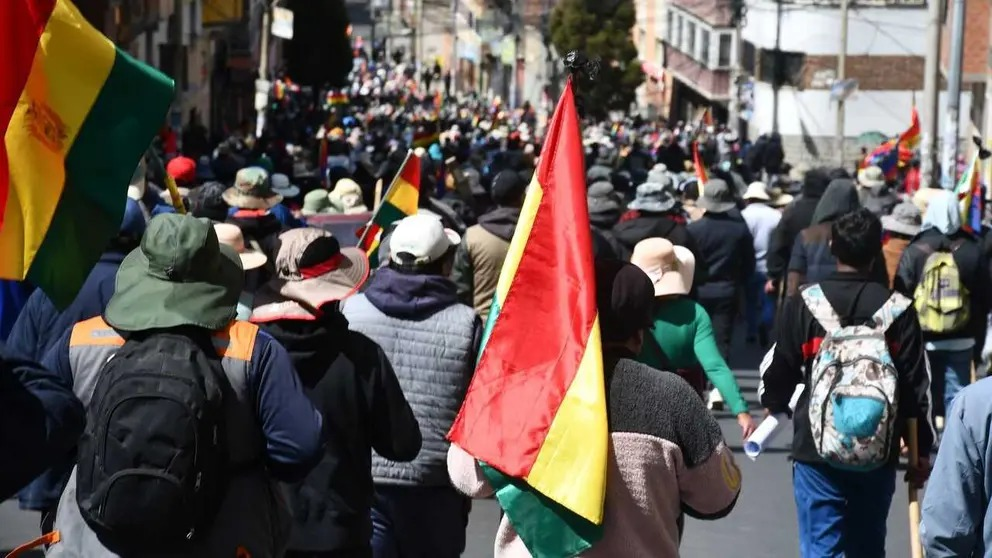
Photo: NODAL
Paz rejected the calls for his resignation but Paz admitted that his government, which has been in office for six months, “has not been governing for all sectors” and must focus on “all Bolivians”. The new Council will meet monthly and begin its work immediately. As the President explained, this will be a forum to which various social sectors and civil society organisations will be invited to present their initiatives and proposals regarding draft legislation, with a view to reaching consensus.
By appointing the lawyer Williams José Bascopé, known for his campaigns anti-money laundering, as Labour Minister, president Paz emphasized “diversity and meritocracy” in Bolivia. Bascopé is of Aymara origin, like the majority of the protesters, while Paz is identified as “Spanish” (white).
The demonstrations and protests started early May, triggered by cuts to fuel subsidies, and escalated rapidly, turning into a massive, multi-sector protest that has left the seat of government completely cut off and besieged by land. The underlying economic crisis, marked by inflation rising at a rate of 14% year-on-year, has triggered discontent among mining unions, transport workers, farmers, teachers and trade unions. These groups are demanding that President Rodrigo Paz reverse his severe austerity measures to curb the rising cost of living.
By announcing the changes, the president made no mention of any police or military intervention in the roadblocks affecting El Alto and La Paz, cities that are currently facing shortages of food, medicines and fuel. This pressure tactic, which demands his resignation, is being driven by farmers, rural teachers, the Bolivian Workers’ Confederation and groups aligned with former president Evo Morales.